
Ceylon Cinnamon vs Cassia: What's Actually the Difference
By the Agromel UK team · 21 August 2026
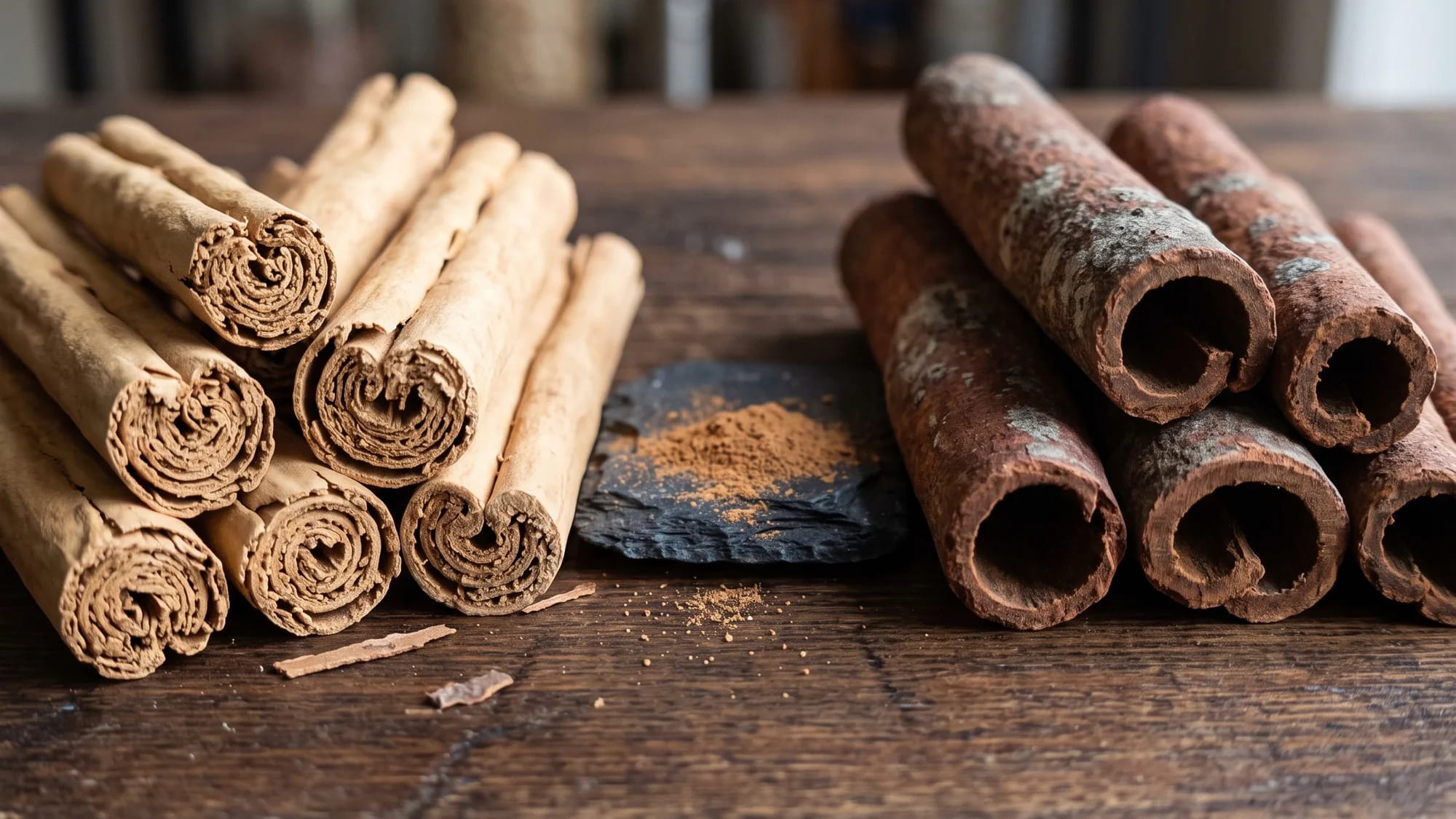
Walk into most UK supermarkets and the jar labelled "cinnamon" is almost always cassia — a related but distinct bark, usually from Indonesia or China, that's thicker, darker and more assertively spicy than what's traditionally called cinnamon in Sri Lanka.
"True" or Ceylon cinnamon (Cinnamomum verum) is grown almost exclusively in Sri Lanka. The bark is thinner and softer, peeled and hand-rolled into multi-layered quills rather than the single thick curl typical of cassia. The flavour is sweeter and lighter, with less of cassia's peppery bite.
The practical difference that matters most is coumarin — a compound that's mildly toxic to the liver in large, regular doses. Cassia contains far more of it than Ceylon cinnamon. The EU's guidance on daily coumarin intake is easy to exceed with cassia if you use cinnamon often; it's a non-issue with true Ceylon cinnamon at normal culinary quantities.
In practice: if you use cinnamon occasionally, either works. If it's a daily habit — coffee, porridge, smoothies — Ceylon cinnamon is the more sensible long-term choice, and most people find they prefer the flavour once they've tried it side by side.